Posts

Showing posts with the label #KnowledgeEconomy

IT#03 Discovery Economy
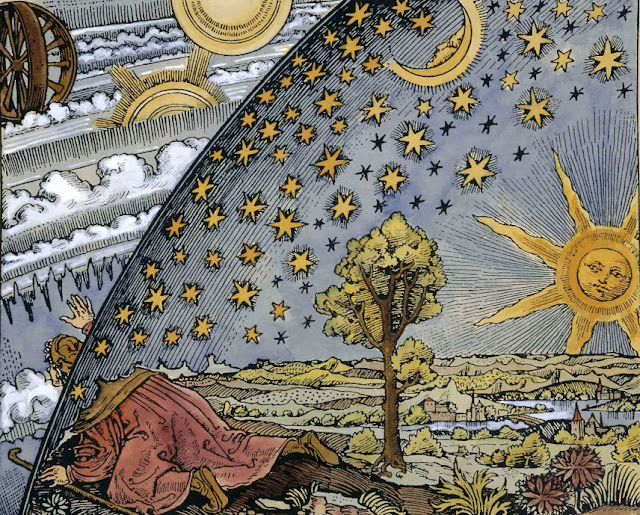
Image
 #Economy, #KnowledgeAge, #KnowledgeEconomy, #DiscoveryEconomy, #SocialSystems This article introduces the idea of Discovery Economy which seems to take a root in the world economy. Parable preface In a far far away land, there was a very lonely king. So, he wanted to marry a princess. He had heard of one locked in the highest room of the tallest tower of a castle guarded by a fire breathing dragon. The king did not have time for such technicalities as killing a dragon or finding the princess and the castle in the first place, so he called the Hero and asked him to rescue the princess and bring her to him. - Sure thing, Your Majesty, - said the Hero, - but I’ll need some time and road expenses. - Talk to my Treasurer, he will provide you for the road, - casually dropped the king and turned to more important things to do. - It does not work this way, - said the Treasurer self-importantly, - Write the Design. Where will you go, which cities you will visit, how much room and fo...

IT #2 Knowledge Economy

Image
#KnowledgeEconomy #KnowledgeAge #KnowledgeWorkers #Economy #SocialSystems #BoringBackground This article explains what knowledge economy is and provides the background info necessary for that explanation. Preface In 1959 “the father of American corporate management” Peter F. Drucker introduced a term “knowledge workers” in his book “The Landmarks of Tomorrow”. Basically, he noticed that since the World War II, we’ve got a lot of workers who could not be managed in the old, Industrial Age, ways. “Scientific Method” of Taylor1 simply did not work anymore with these workers. And the suggestion was to manage them differently. Later a lot of other people contributed to how it could be done, and it’s still very much work in progress. Adding to that statement, it’s fairly clear why it did not work. Tailor’s method was to split a complicated process, like creation of optical lenses or arsenal workers. With knowledge workers splitting work into tiny steps on one project did not work, because on...

IT#10 Office Evolution and Unnatural Selection

Image
#KnowledgeEconomy #DiscoveryEconomy #ITManagement #Management #SocialNetworkEffects #UniversalEvolution This article explains why any knowledge economy company represents an evolutionary environment, why this is important, and how it works with the factors which affect the market fit of your company. The topic is most likely of interest for managers or CEOs. This is done using a computer simulation model. Really? Office Evolution? Yes. Check other articles on this site. There is a theory of universal evolution which applies generic principles of evolution to non-biological systems. It says that you have evolutionary environment whenever you have: A limited pool of resources, e.g. an ecological niche, audience or salary fund. A number of entities that compete for this pool of resources. Eventual demise and reproduction of these entities with sort of inheritance and mutations. A typical business satisfies all these conditions. It has: A limited salary and bonus fund. Employees compete fo...

IT#12 The Evil of Management by Fear: Prey or Predator?

Image
  #KnowledgeEconomy #DiscoveryEconomy #ITManagement #Management #SocialNetworkEffects #Neurophysiology This article talks about why so popular in the past methods of controlling workers by fear is bad not just ethically but for the company performance and productivity as well as bringing the lasting cultural and financial damage to the company working in the Knowledge Economy. Management by fear is not new to the Human civilization. Treatment of slaves, medieval peasants, factory workers was normally based on fear. And it worked! Well, occasional cases of treating all those differently sometimes brought much more impressive results. For example, in the Ancient Rome some family slaves pretended to be their own owners and died for them, when the latter ones hit a proscription list. Villages in Russia have prospered and brought much higher income to the owners when they treated peasants well. Still these were exceptions, and in the majority of cases people were managed by fear. We all...